
The next step was to remove the forms for the footings. That was a fairly tedious though simple job, and we never thought of taking any photos of the process.
After that, we started the process of setting up the forms for the first segment of the cement telescope pier (since it will be nearly 30 feet tall, it will be done in three pours). Because we don’t have easy access to a crane, there was no way to construct a rebar structure on the ground and then lift it into the forms for the column. So we elected to build the rebar structure in place on the pad, and then erect the forms around it.
We would be building a rebar structure 20 feet high, starting a couple of feet above the ground and tied to the existing rebar in the telescope pier pad. We knew it would be very wobbly and somewhat precarious until it was fully built and enclosed by the concrete forms. So, we decided to do that on August 30, 2025, a day which was forecast to be clear and sunny with very little wind.
Evan and I had the structure nearly complete and were nearly ready to start erecting the plywood forms around it, to which we could then fasten the rebar cage to make it stand more rigidly. And then it started to rain, but since rain wasn’t in the forecast and there was just a tiny blip on the weather radar overhead, we thought we’d go inside for a half an hour or so and continue working after it quit.
But nature had other plans. That little blip didn’t move. It rained and hailed heavily for around 45 minutes turning the work site into a swamp. But at least it wasn’t windy, so the precarious rebar column stood upright. However we realized we would have to finish the job the next day because of the mud, so the plan was to tether the cage with guy wire ropes to ensure it stayed upright.
But before we could get to that, it started raining and hailing heavily again, and this time with a huge windstorm. It blew our ladder down and caused the whole assembly to lean precariously. So that the structure didn’t topple altogether, we had to run outside during the peak of the storm (with lots of lightning to top it all off; not that welcome when we were working with essentially a huge lightning rod!) and try and temporarily rig up guy wire ropes at least in one direction to help support it.
In the end, the rebar structure survived. But what was supposed to be a clear and quiet day turned into one of the biggest rain, hail, and wind storms I have seen in a long time. We accumulated 5 inches of rain in about 2 hours. And it all came from a tiny little cell that didn’t hit anywhere really other than Legal. The cell just stay put and never moved.
Here’s a timelapse video from one of the security cameras showing how things went that day.
After the storm ended, we went to inspect the aftermath. Fortunately, everything held in place… just barely.
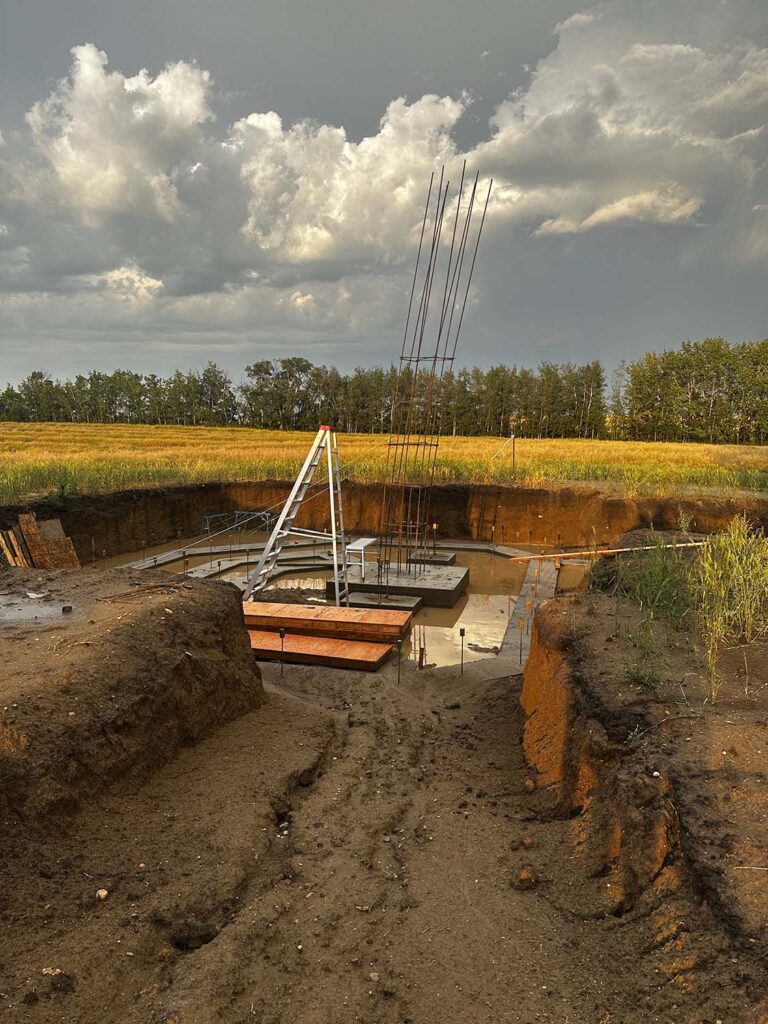
Our first job once the rain stopped was to put in more guy wire ropes to straighten out the tower and support it better. Of course, the work got 10 times harder having to work in what had turned into a swimming pool. For reference, the footings were 10 to 12 inches high, and the water came to nearly the top of the footings.
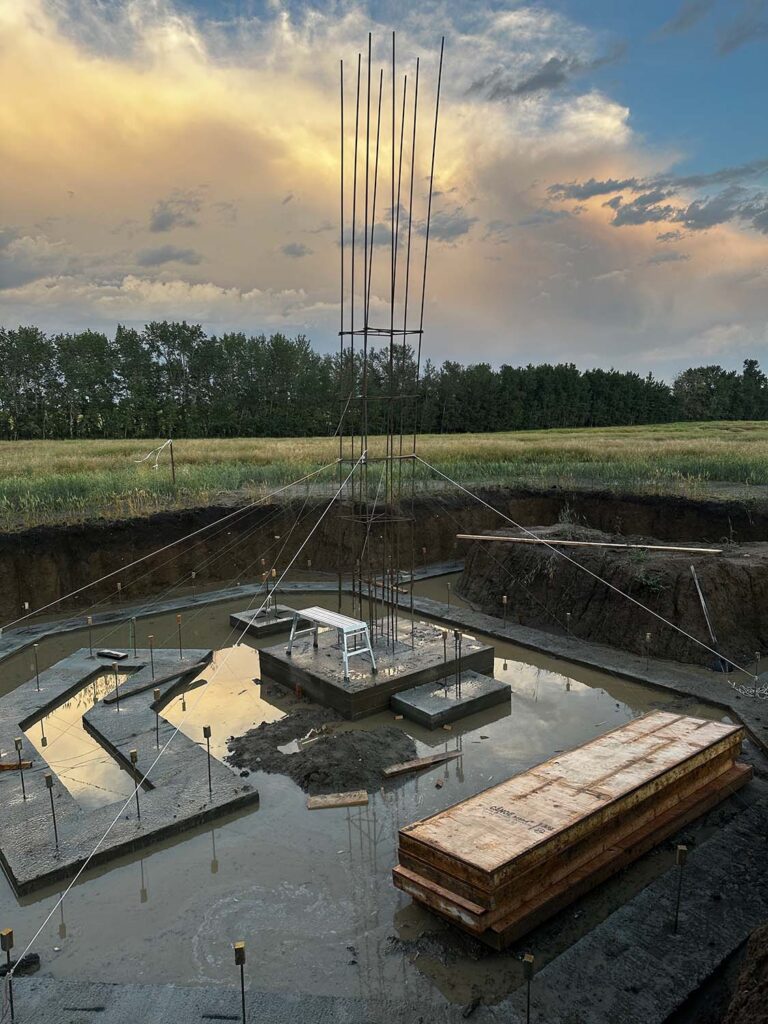
What was supposed to have been a job for just a couple of hours turned out to take much longer. Knowing that the rebar cage would be much more stable and secure when the plywood forms for the column were erected around it, we got to that as soon as we could.
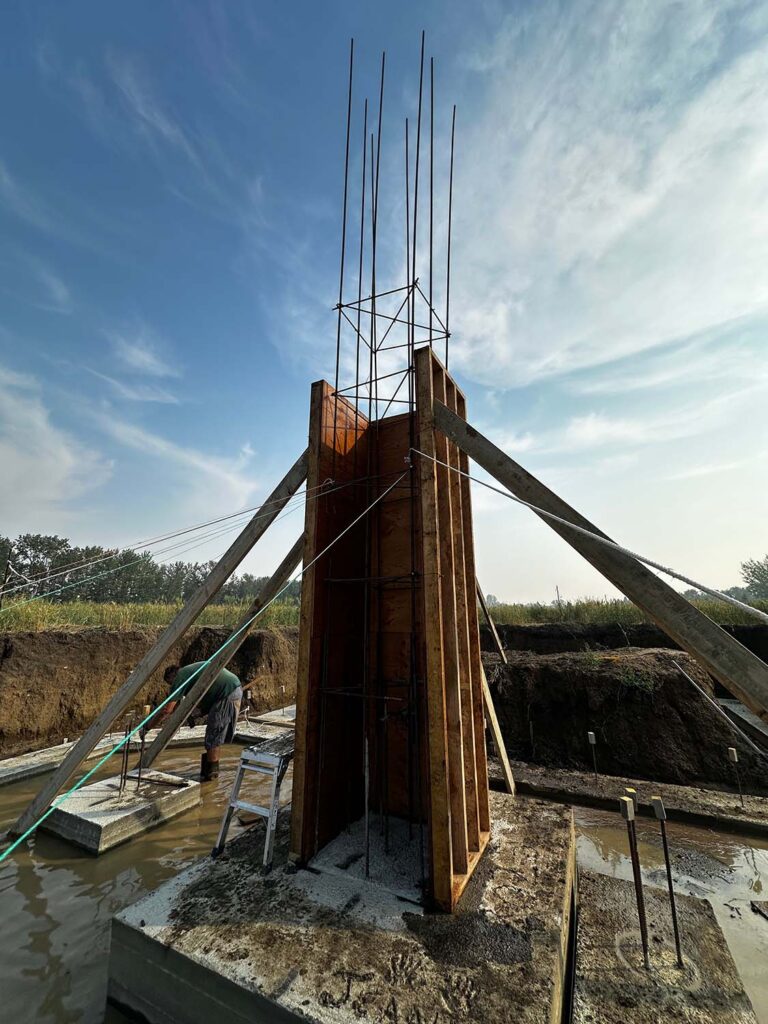
As we lifted the forms into place (at least they were pre-constructed as four walls), we were able to tie the rebar to the forms internally to help reduce how much it would sway during a wind.
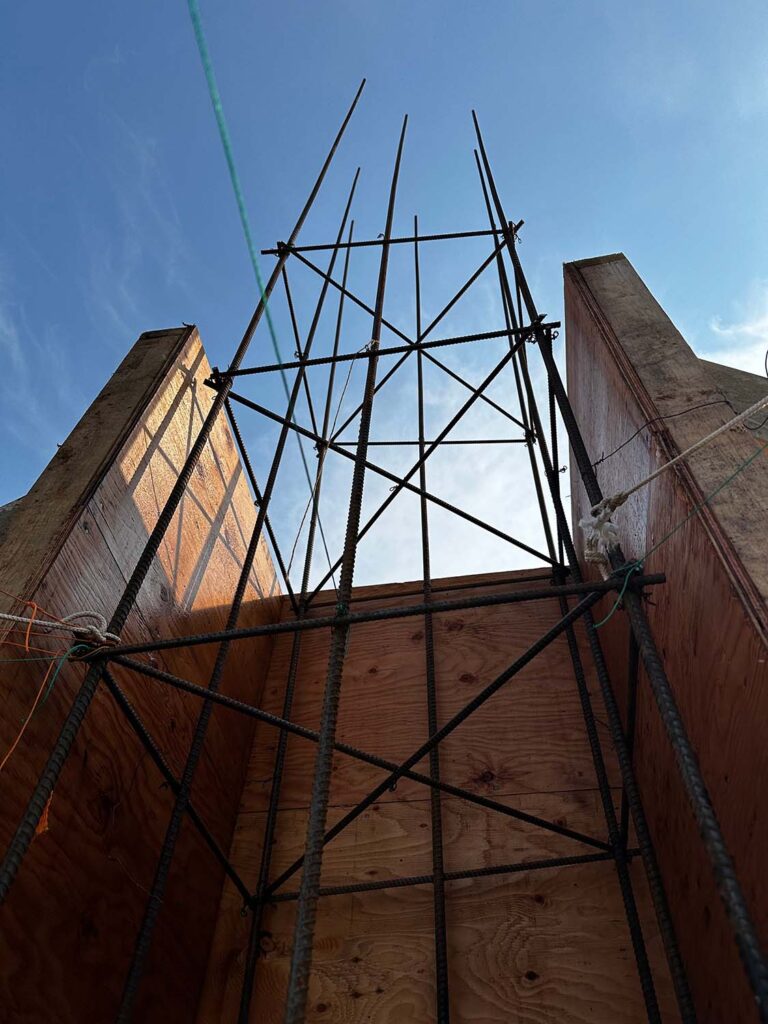
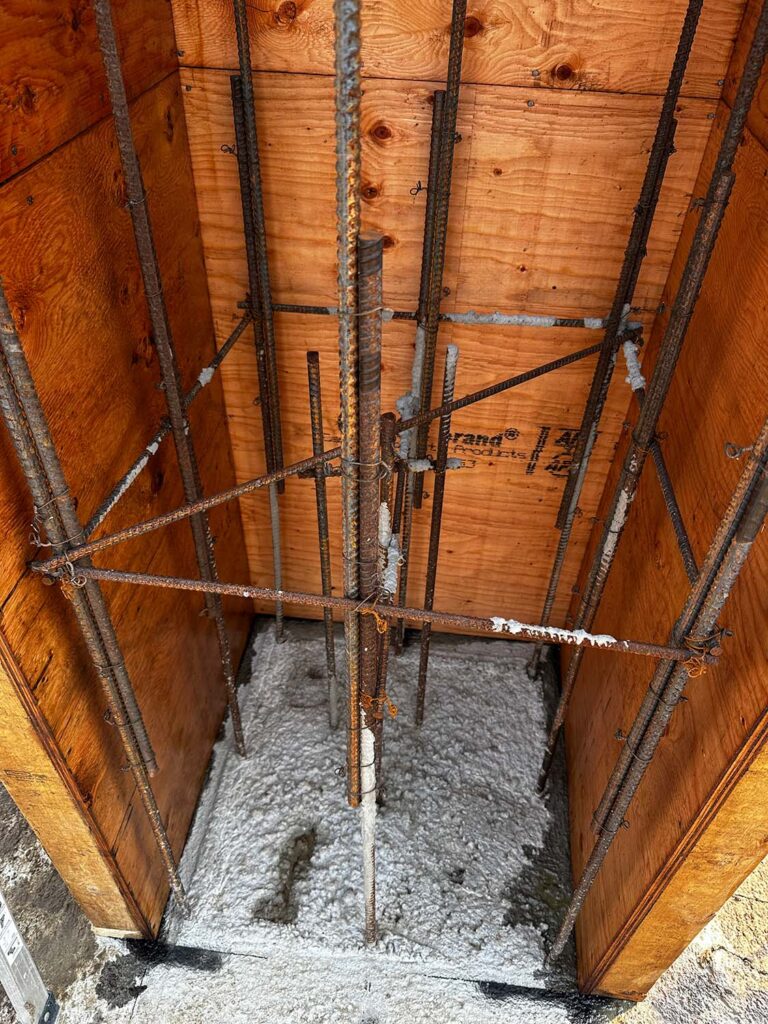
Finally, the rebar and forms for the lower portion of the telescope pier were in place and relatively supported for wind. But I would still be anxious to pour the cement in the column to finalize the job.
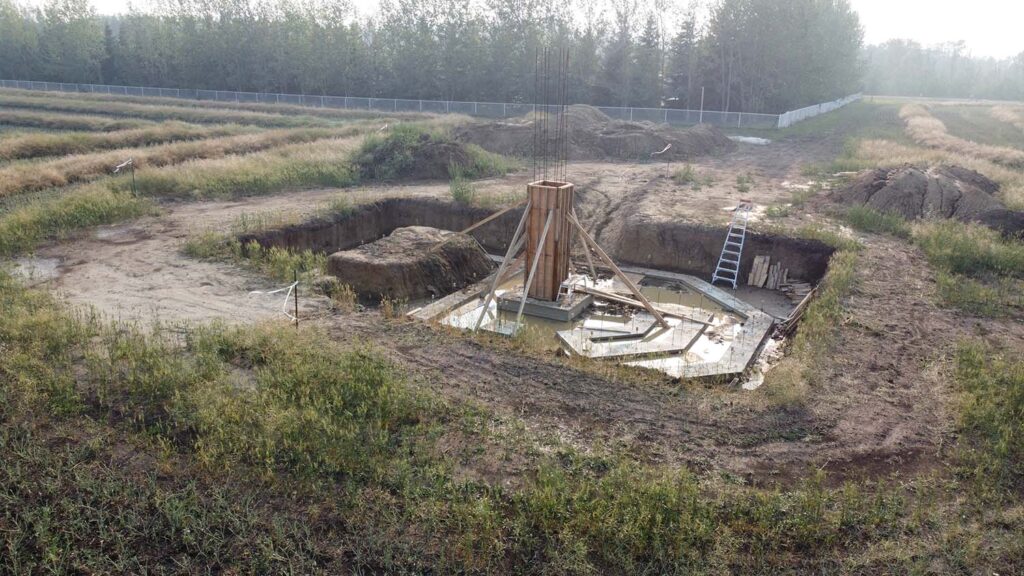
Several days later, the water in the excavation still hadn’t significantly subsided. So I ended up setting up a sump pump to remove the water so the site would eventually dry out and we could continue working. It turns out that 4 long extension cords connecting a sump pump to the nearest electrical outlet around 350 feet away still works. Though I certainly wouldn’t want to run anything that draws a significant amount of current.