
Now that the frost walls were all done, it was time to backfill everything, inside and out. Tempting as it might be to keep the interior of the observatory dug out as a basement, that would require the building to be heated to prevent the foundations from freezing. Instead, burying it inside and out will keep the base of the foundations below frost level so they don’t freeze in the winter, even though the building is not heated.
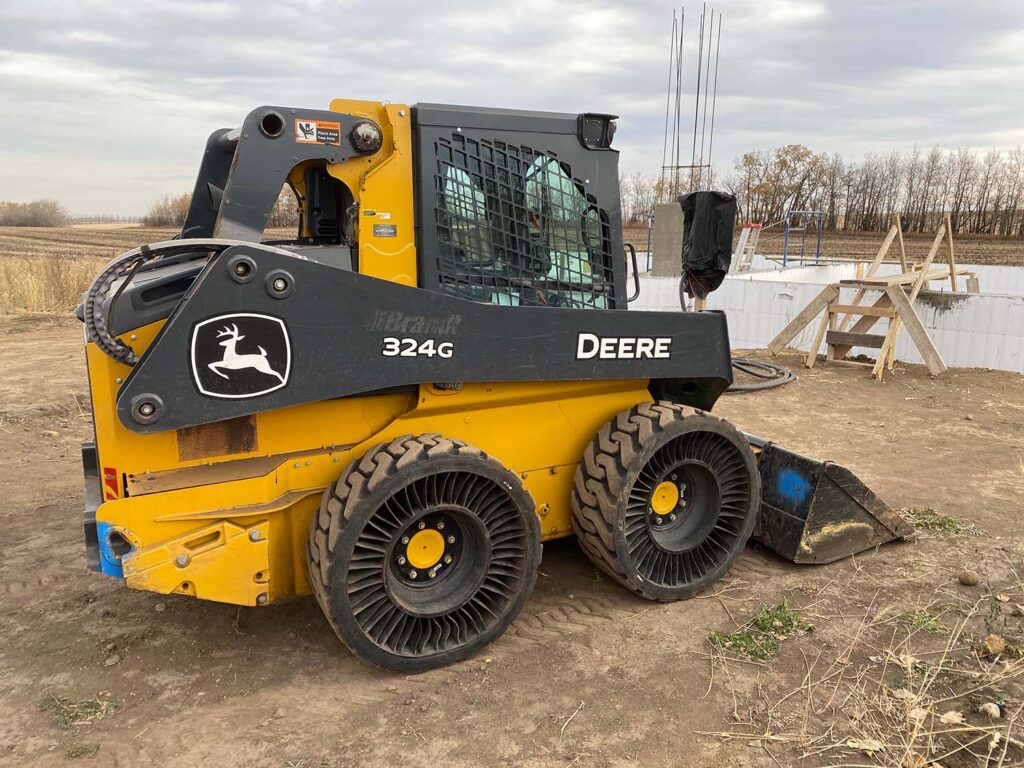
We rented a skid steer from Roy Construction to do the work. It was the first time that any of us had driven a skid steer, so we were looking forward to learning how to do it!
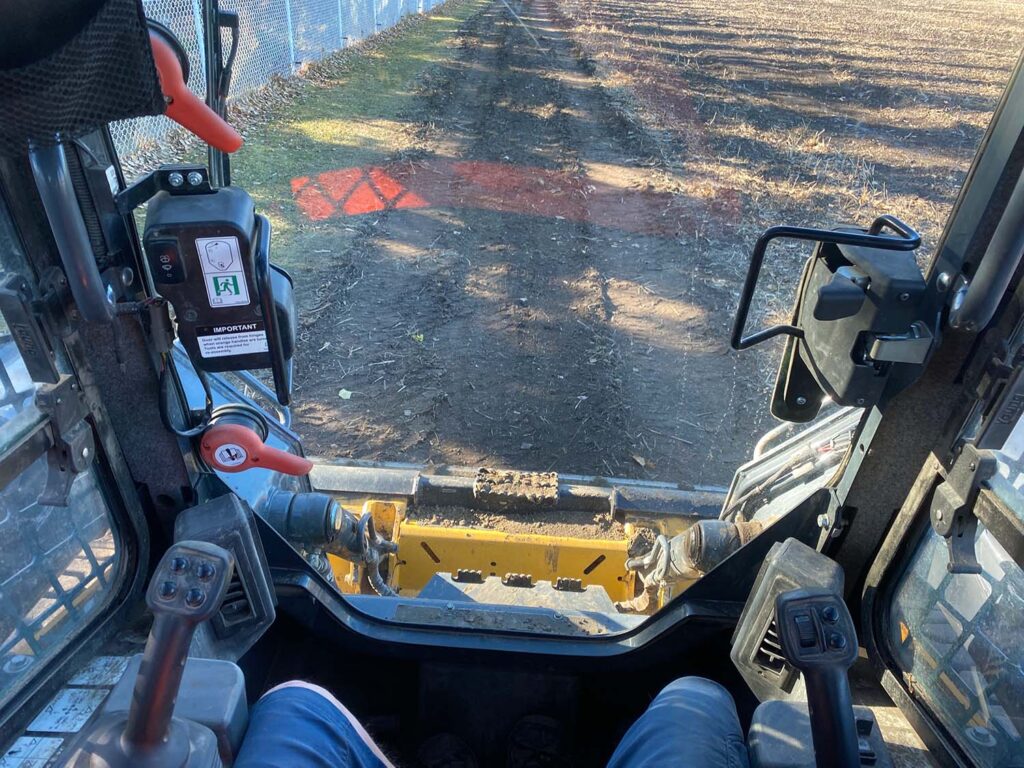
The view from inside the cab of the skid steer. Over the next 3 weeks, this would get to be very familiar.
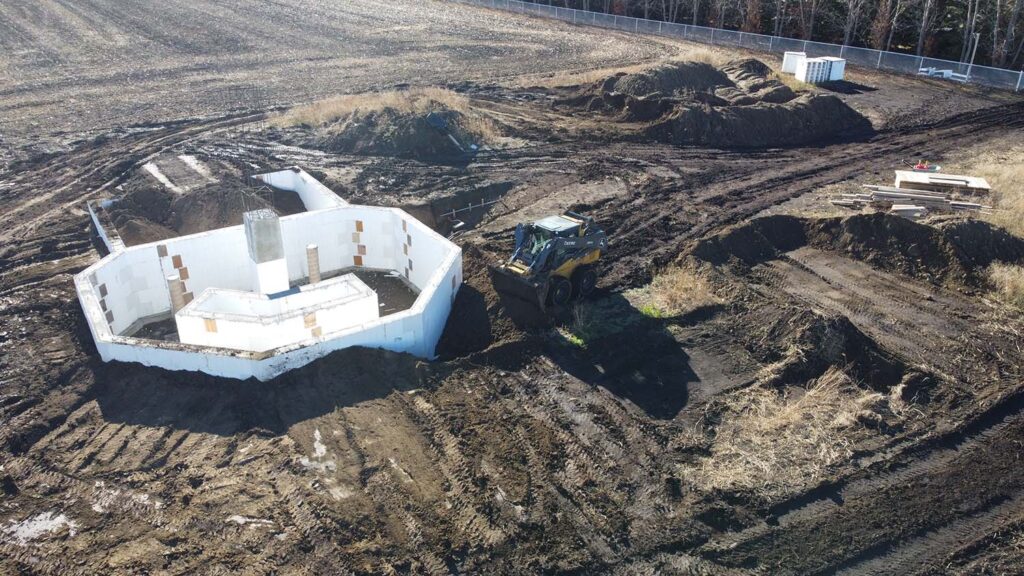
Working on filling in around the exterior of the building.
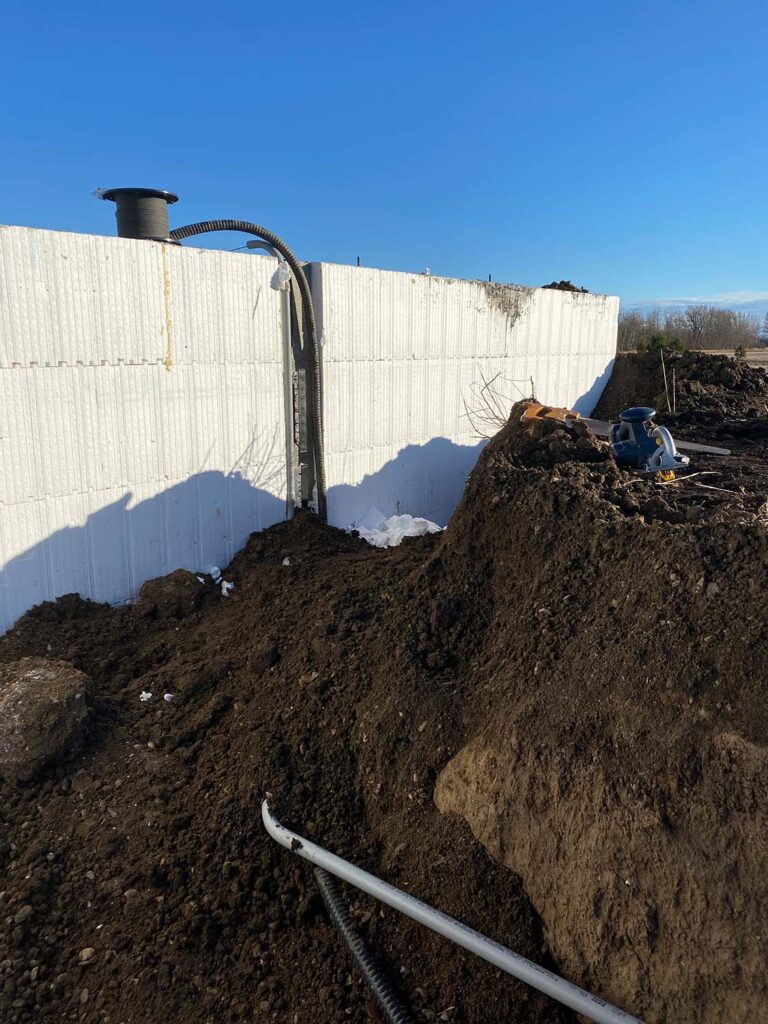
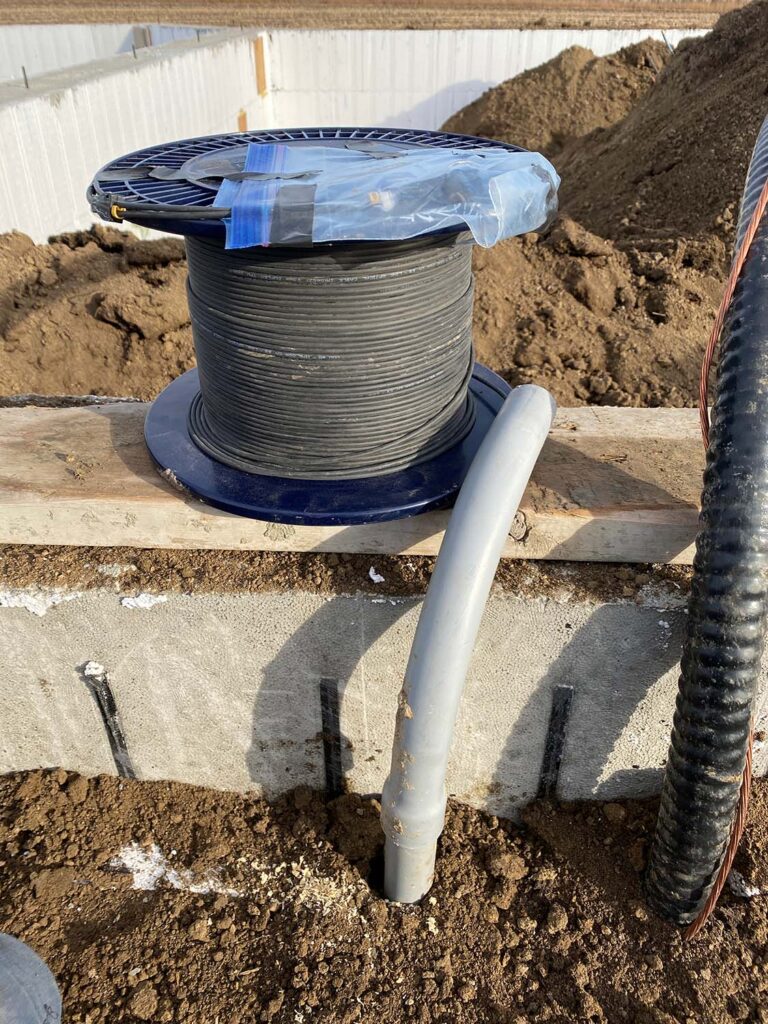
Using the ICF blocks to form the foundation of an unheated building resulted in a few changes to procedures that would not normally be needed if a wood frame construction would be continued above ground level including external insulation. Since the walls will not need to be insulated, and we want the exterior of the walls to align with the edge of the cement, not the ICF, the ICF needs to be cut back where it will interface with the walls above. Therefore, the power and data cables need to be brought up against the edge of the cement, not the edge of the ICF, or they would be coming out of the ground 2.5 inches away from where the exterior of the wall will end up.
Here, we are starting to fill clay back into the interior of the rectangular section.

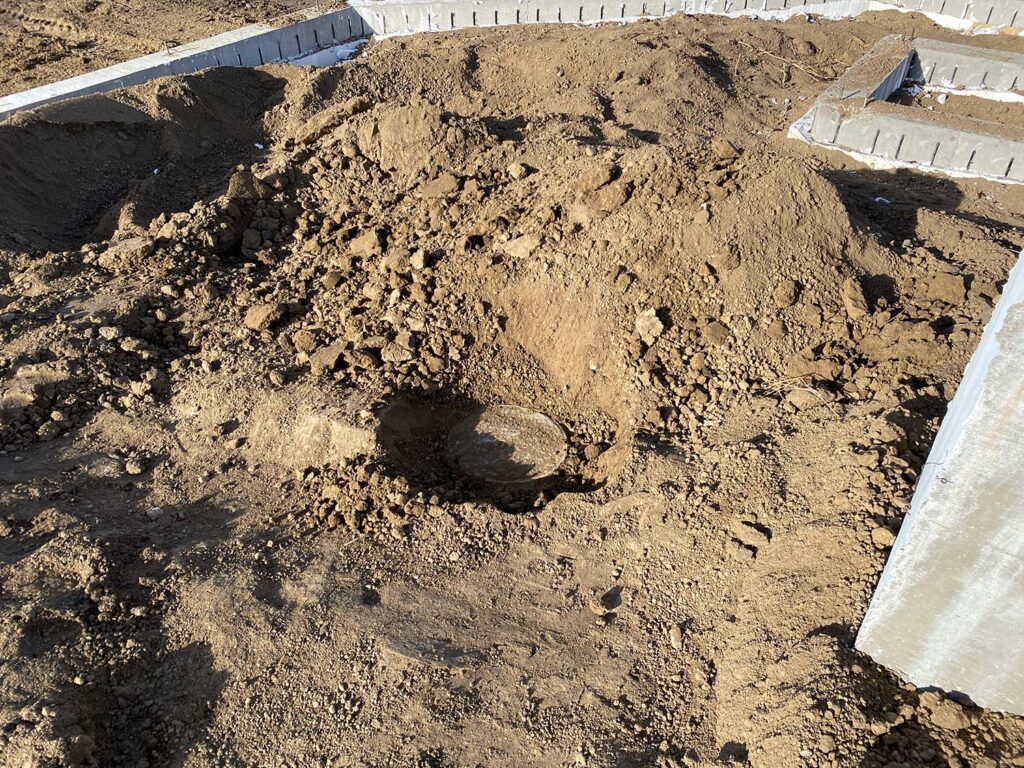
When we started backfilling, we had to move where the power and data cables came out, so they are adjacent to the wall. Here, you can see our 3 conductor 3/0 AWG ACWU90 cable for power, and the end of our 200m spool of single mode duplex fibre optic cable. The spool will be weatherproofed to (hopefully) survive the winter outside, since the framing of the building won’t start until the spring of 2026, so it won’t be out of the elements until then.
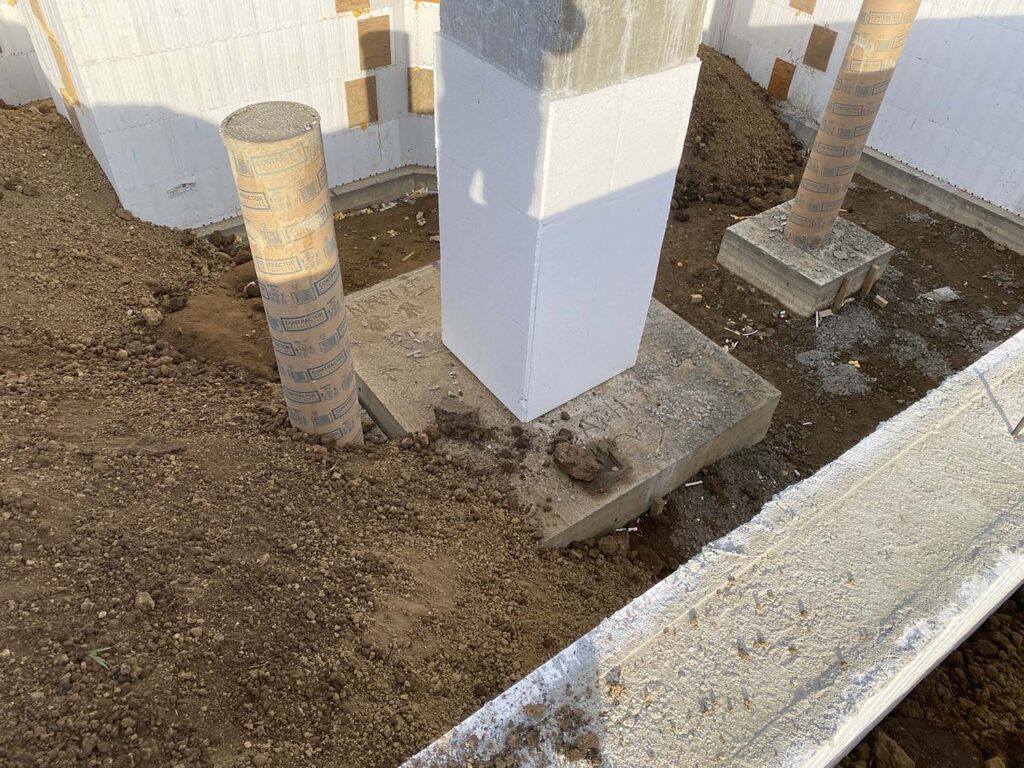
We decided to enclose the portion of the telescope pier that will be buried below ground with 1/2″ insulation. This isn’t to provide insulative qualities, but rather to help prevent frost lenses from adhering to the column during the winters.
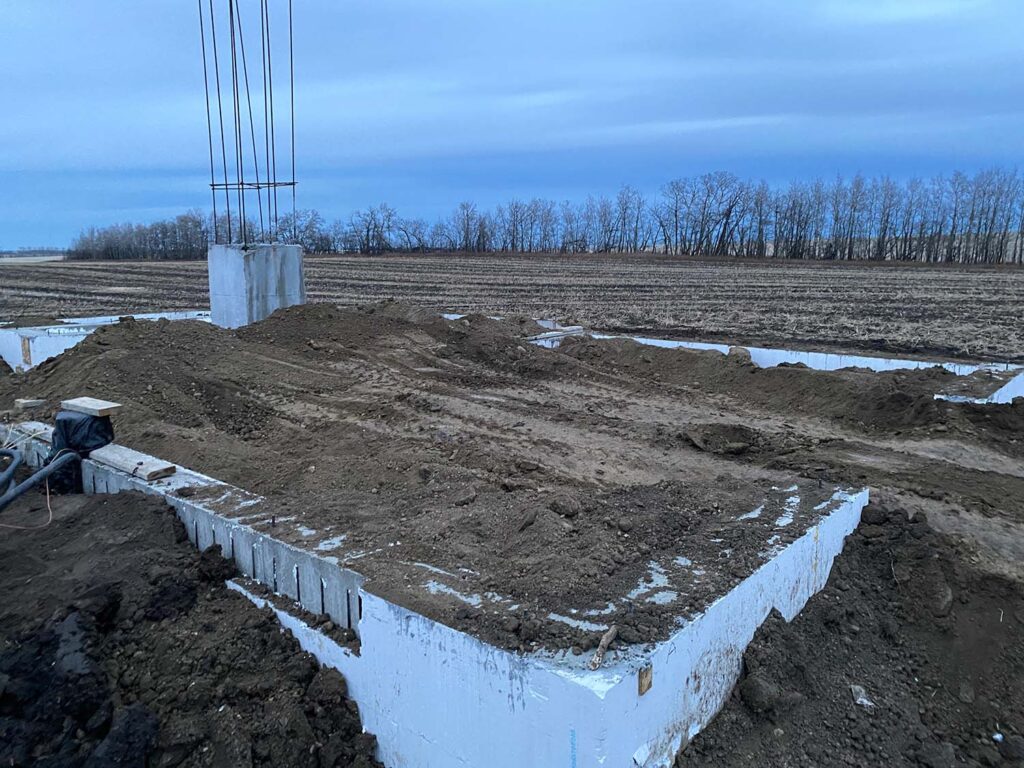
Here, the rectangular portion of the observatory is pretty much filled in, and is being used as a staging area to get into the octagonal portion to do the same there.
Making progress in backfilling the interior of the octagonal section from the rectangular section.
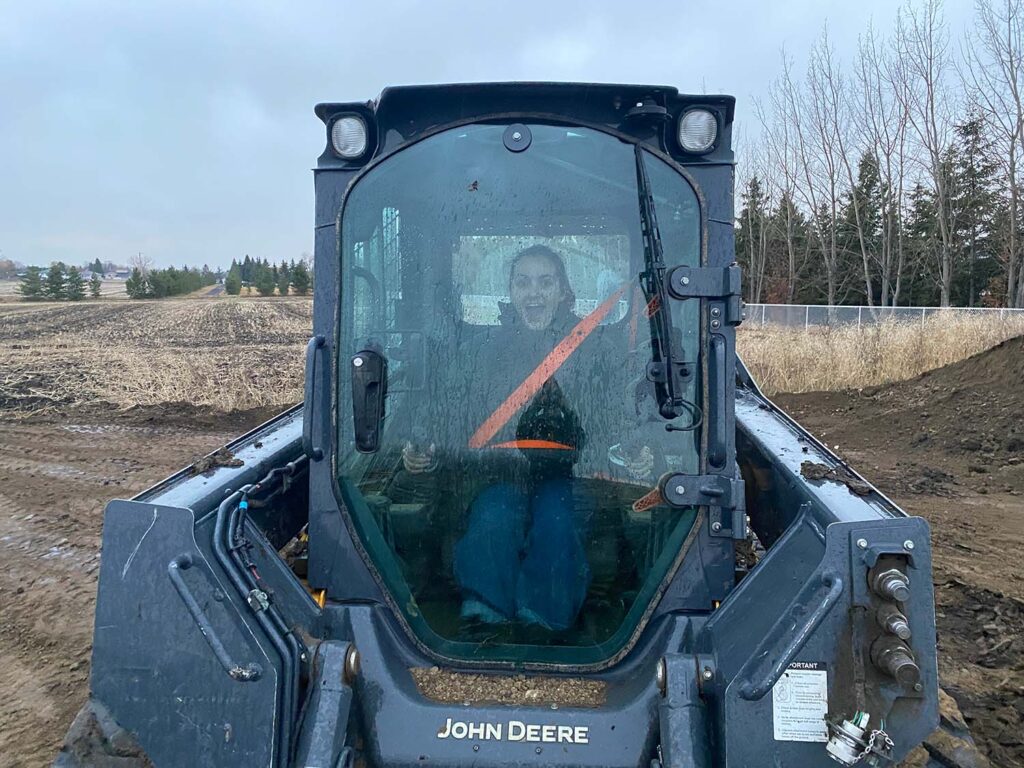
Daphne learning how to drive the skid steer too!
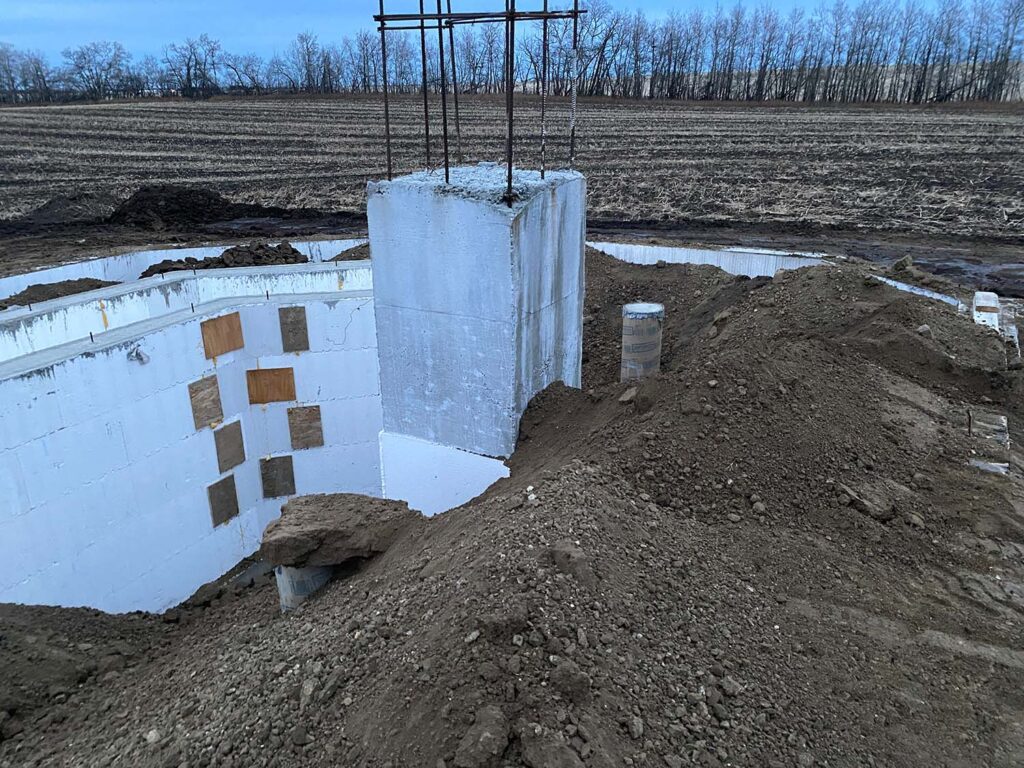
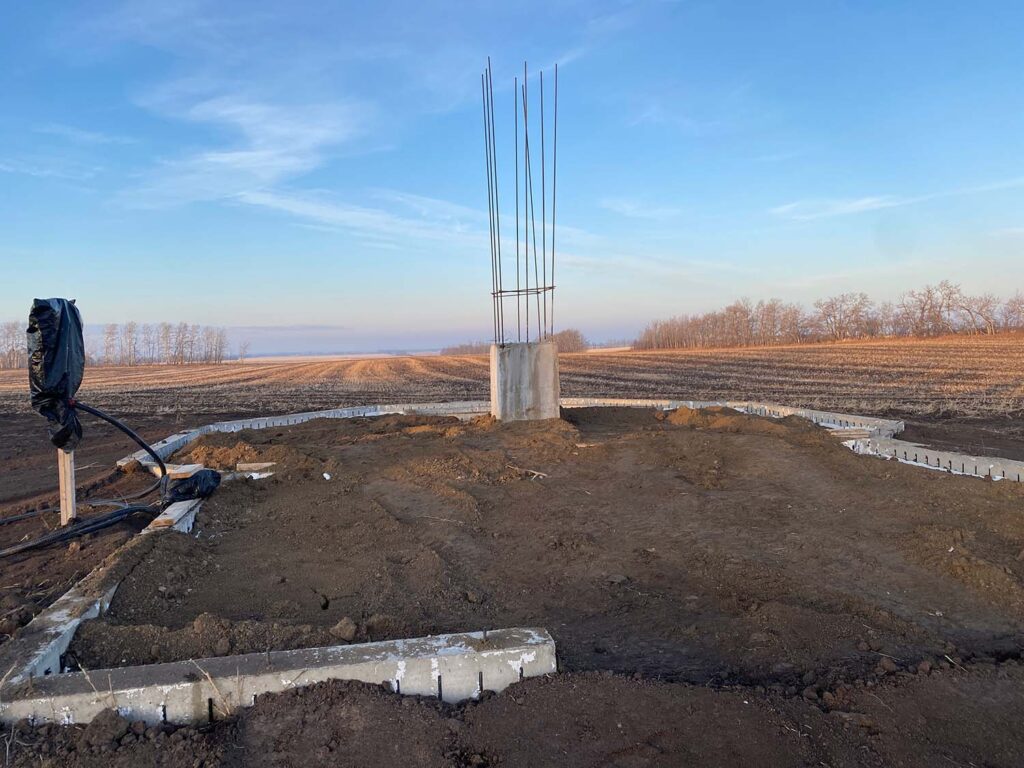
Here, the interior of the octagonal section is largely done being filled. Note that we cut off the top 8 inches of foam around the ICF of the stairwell, because we will eventually be putting 4 inches of gravel and 4 inches of cement to make the floor, and this way the floor will go right to the edge of the cement frostwall without a segment of ICF separating the two.
Also, there is probably a bit more fill in the interior of this section than we need, but I expect it to settle some over the spring into next year, before we pour the cement pad. Regardless, we are probably going to have to remove some by wheelbarrow, but it’s too confined in that area to be able to do much of the final levelling work with the skid steer.

After backfilling, I dug out the 12″ sonotube concrete columns that will provide a base for the teleposts that will support the second floor. They are intended to top out at 4 inches below the finished concrete pad height, so the base of the teleposts will be embedded in the pad by that amount.
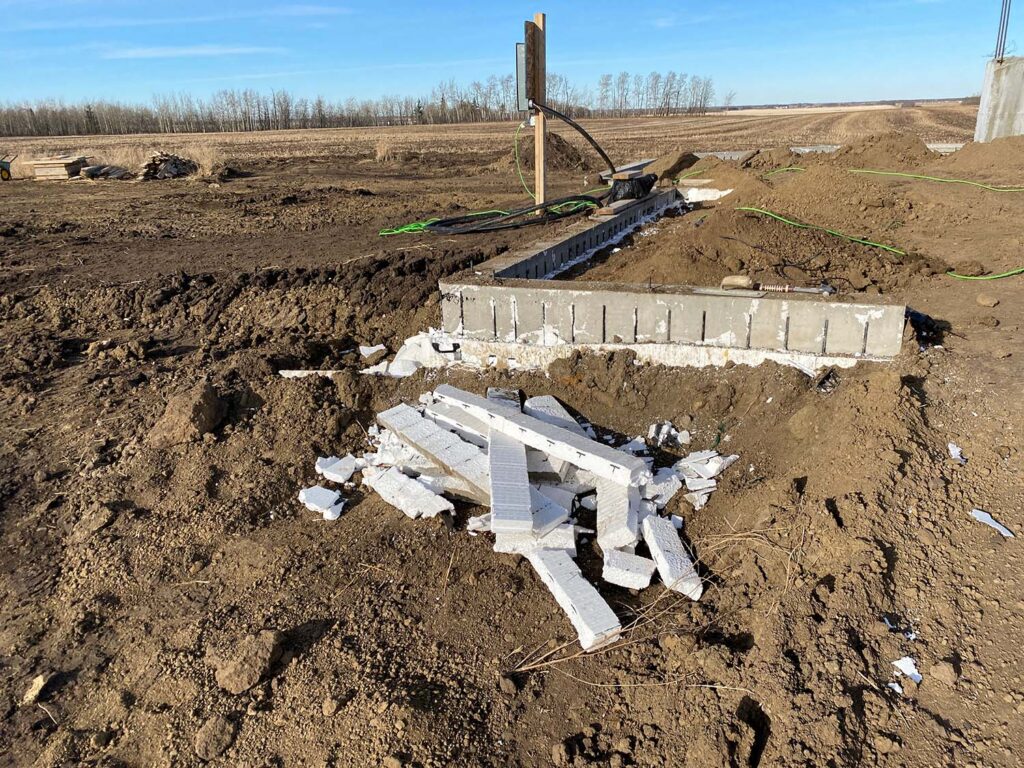
Here, we were working on removing the top portion of ICF from the walls, so the framed wall that will be built on top can have its exterior edge flush with the concrete, not the ICF blocks. This was pretty painstaking work, done largely with a reciprocating saw (sawzall).
Finally, the interior and exterior of the excavation was filled with clay, and then we worked on building up from the surrounding terrain to the wall, making the building on a bit of a hill that will also help with drainage.
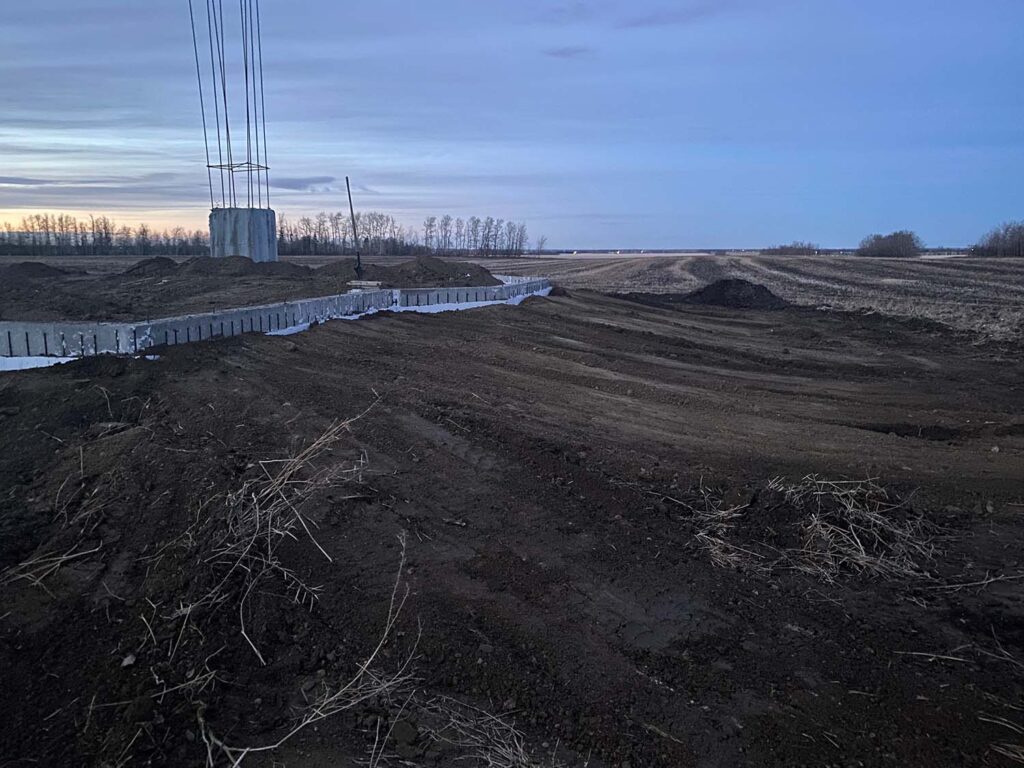
We then topped it off with 4 to 6 inches of topsoil, bringing the final grade of everything up to about 6 inches below the top of the cement frost wall.
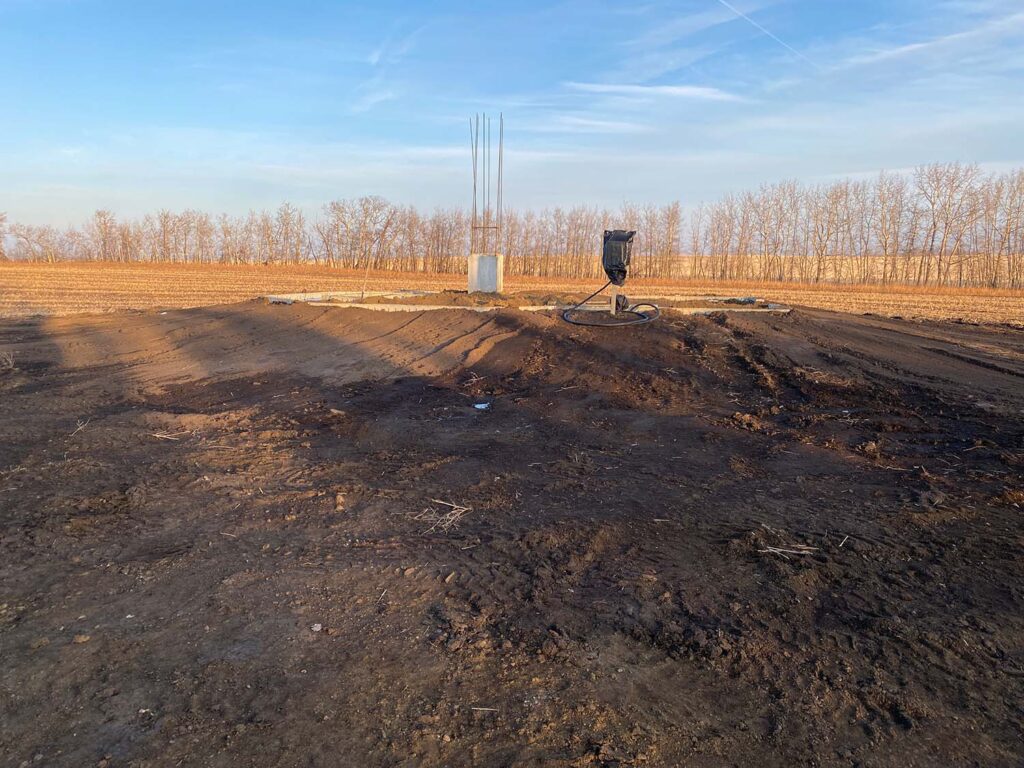
The finished interior.
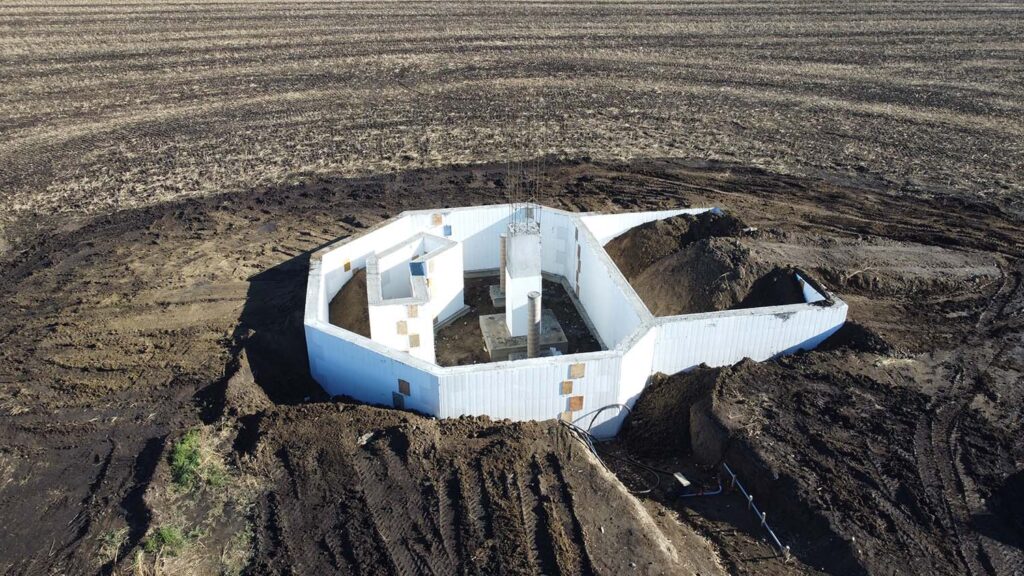
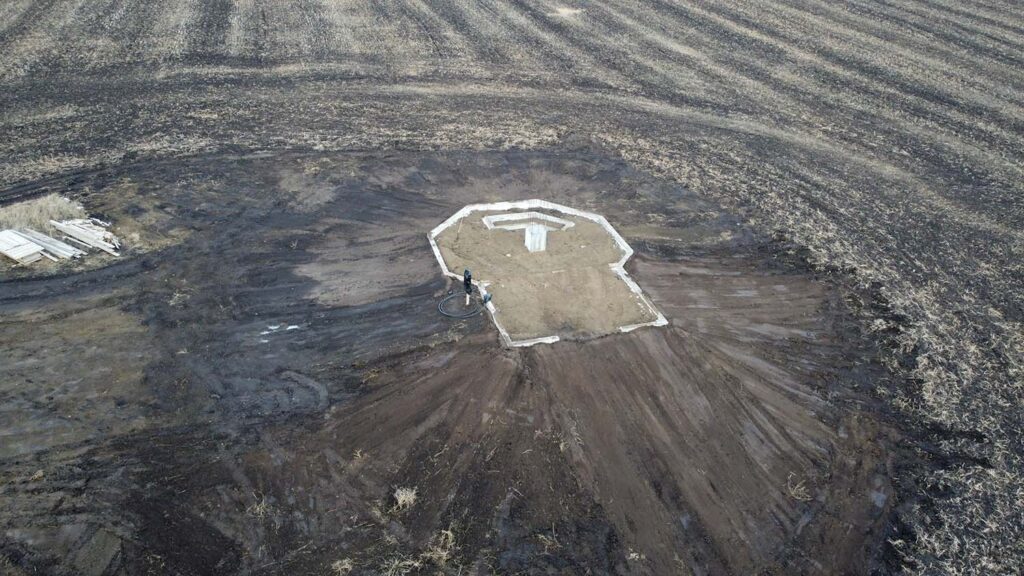
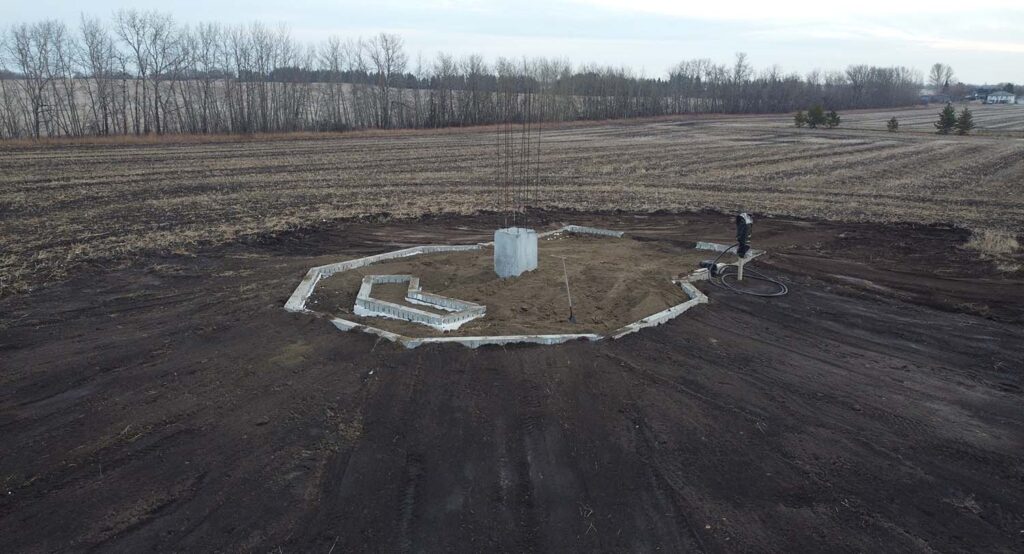
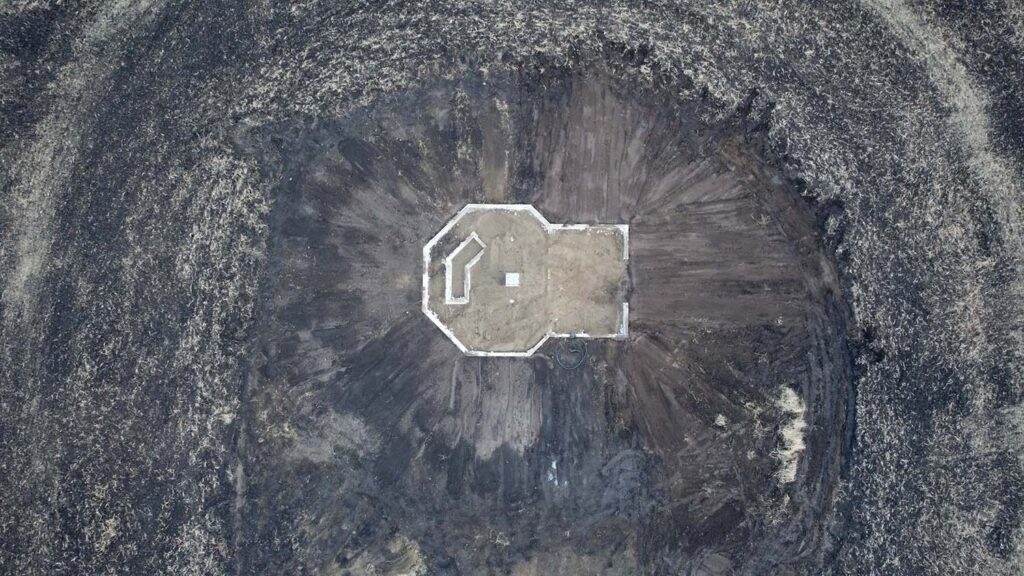
And finally, a few aerial shots showing the job completed. The huge amount of work that we spent in 2025 is now mostly buried so that only 6 inches of frost wall foundation is visible. But it should provide a great base for the framing work that will start in the spring of 2026 when the snow is melted away. We were done to this point just in time – only a day or two later, winter and its accompanying snows arrived.
Previous: Scaffolding Removal
Up: Construction